
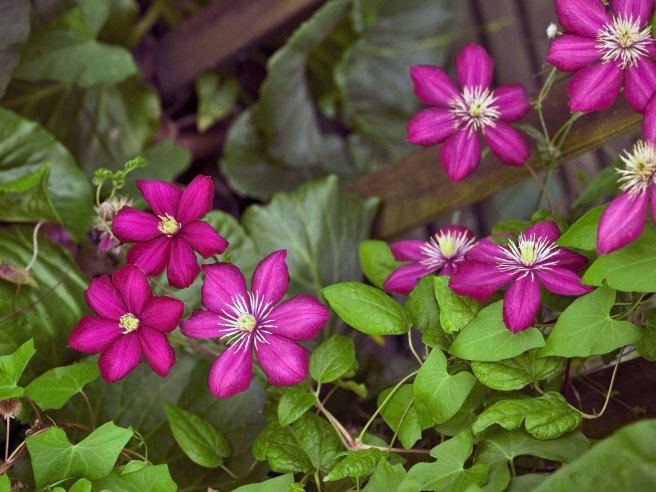
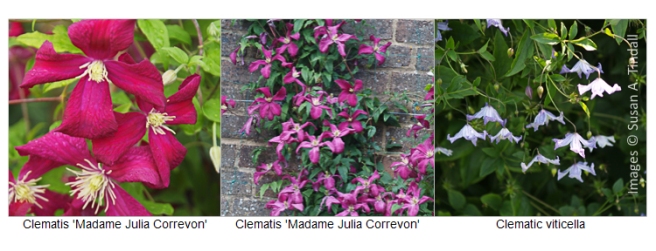
The summer-flowering clematis that belong to the viticella group are the easiest, possibly even the most-satisfying of them all. If you have never grown clematis before, or have had some disappointments with them, the Viticellas are the perfect solution.
They flower from late June or July, sometimes going into autumn. They are vigorous climbing plants that are remarkably easy to grow and care for. Most of them reach 4 metres or more and provide masses of flowers that spread over a good area, thus providing a substantial visual return for your investment. The flowers are generally single and quite simple in appearance, often with a nodding habit, and sometimes having contrasting stamens at their heart. These forms provide invaluable cover for vertical surfaces, particularly fences and walls that can be a loud presence in small gardens. The clematis will soften boundaries and provide a backdrop to other plants.
Growing ‘Just the one’
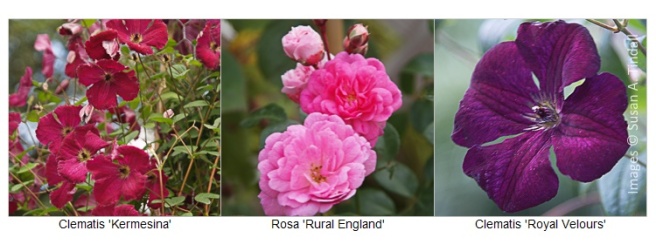
It can be helpful to try growing a single specimen for a while. This will give you experience of the general character of these plants and their fit to your style of gardening. For starters try the soft but deep red blooms of Clematis ‘Kermesina’. This has quite large flowers for the group and provides a rich show from late June through most of August. Red shades look particularly attractive against green foliage shrubs.
Clematis with roses
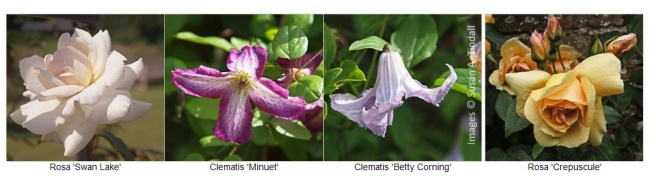
Classically clematis are combined with roses, often to beautiful effect. Viticella forms are unsuited to roses that are described as ‘summer flowering’ since these flower in June and finish about the time the clematis get going. Therefore choose climbing roses that flower through the summer. Good combinations are pink and purple shades. An example being the rambling rose Rosa ‘Rural England’ with its’ clusters of small warm pink flowers combined with the velvet purple of the rounded blooms of Clematis ‘Royal Velours’.
For a fresh white and pink combination try the sophisticated Rosa Swan Lake = ‘Macmed’ with the unusual four-petalled Clematis ‘Minuet’ strikingly coloured white and dusky pink. Finally, the nodding fan-shaped blooms of light blue-mauve Clematis ‘Betty Corning’ with the unusually coloured Rosa ‘Crepuscule’ that has clusters of copper-hued yellow flowers that are fully double.
Clematis trained over plants
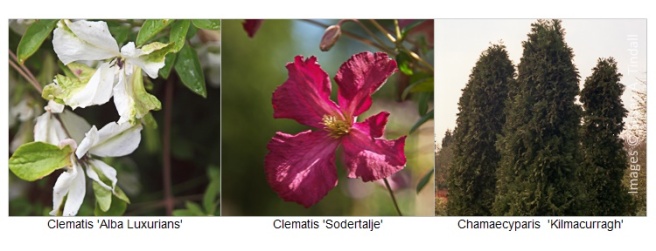
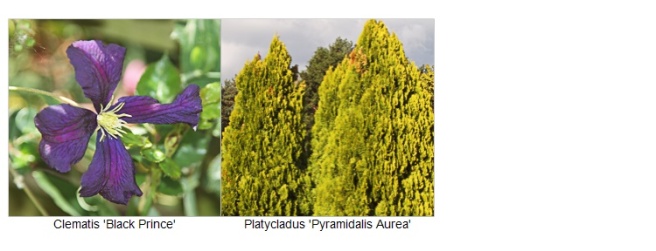
The viticella clematis is beautiful when trained over substantial shrubs. The dark green of yews or columnar Lawson cyprus such as Chamaecyparis lawsoniana ‘Kilmacurragh’ can be combined with the white, green tipped flowers of Clematis ‘Alba Luxurians’ or the rich red of Clematis ‘Sodertalje’ . Finally, for something really bright, combine the velvety black-red nodding flowers of Clematis ‘Black Prince’ on the golden foliage of conifers such as textured Platycladus orientalis ‘Pyramidalis Aurea’.
Care details
Viticella clematis is hard-pruned in late winter or early spring when the plants are cut back to the first pair of buds above ground level. The old foliage can then be pulled away from its supports. Vigorous young shoots will shortly appear. As with all plants, clematis need plenty of water and should be fed regularly or use a slow-release fertiliser in spring.
Susan A. Tindall from Joy of Plants
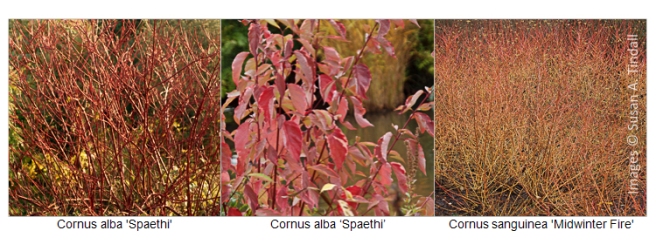
 The coloured-stem dogwoods: Cornus alba, Cornus sanguinea, and Cornus sericea. They are primarily grown for the colour of their bare winter stems, but some have variegated foliage which makes them desirable all summer. Cornus alba ‘Spaethi’ has elegant green and yellow variegation while the green leaves of Cornus sanguinea ‘Midwinter Fire’ have excellent autumn colour. Dogwoods need cutting to near ground level in spring to maximise their stem colour.
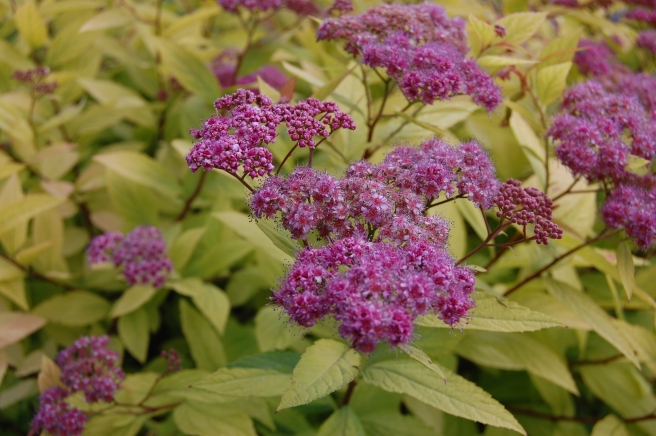
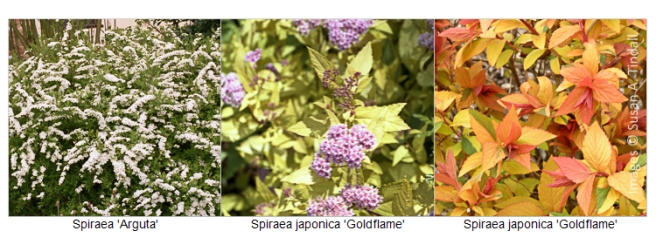
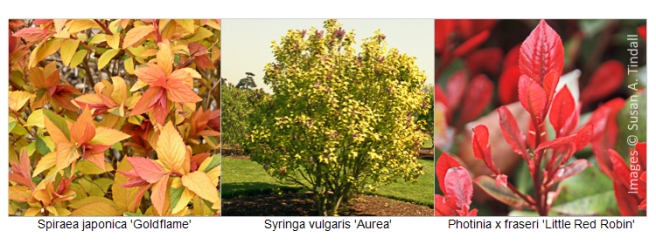
 The affable spiraea in many varieties that includes the spectacular spring display of white flowers on the hearty Bridal-wreath Spiraea ‘Arguta’ which is managed with a simple annual prune. In addition there are a useful range of Spiraea japonica forms with domed heads of flowers that appear in July in red, pink and white shades. A number of them have stunning spring foliage in gold and copper shades such as Spiraea japonica ‘Goldflame’ The japonica forms only need a hard prune every few years to keep them compact.
 Three herbaceous plants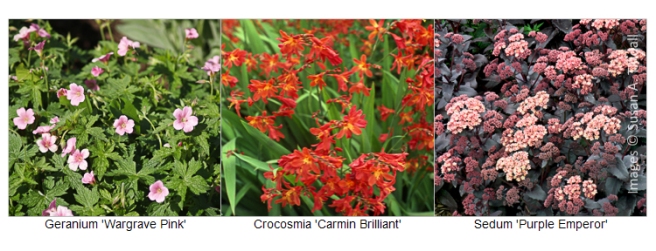
 Finally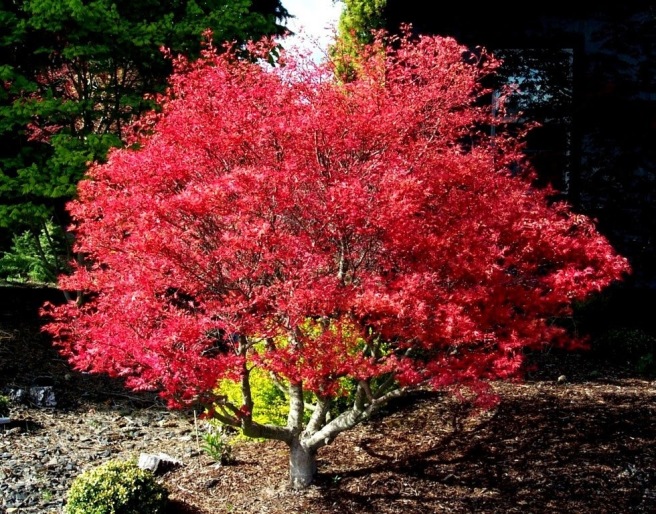
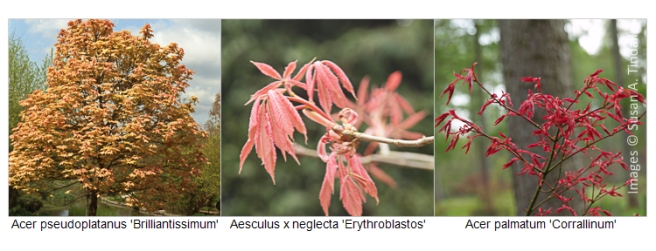 On a more modest scale, the Japanese maples often combine their brilliant autumn tints with striking spring foliage. Acer palmatum ‘Corrallinum’ resembles a large helping of candy floss when the leaves open, while Acer palmatum ‘Kamagata’ has deep red foliage in spring, is light green in summer and turns orange and yellow in autumn. The rare Chinese Cedar Flamingo is a brilliant and improbable pink shade in spring and follows this show with fragrant white flowers in early summer. The amelanchiers such as Amelanchier lamarckii briefly display young leaves coloured in red, copper or bronze shades in addition to heavenly white flowers and autumn tints.
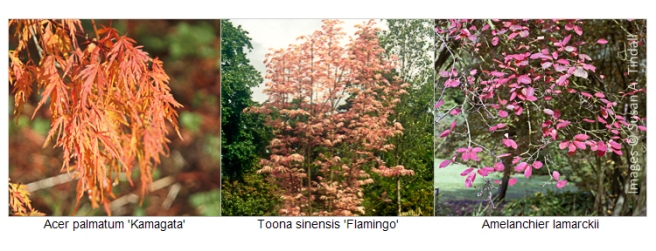 A number of shrubs have beautiful spring foliage, perhaps the best example being varieties of the compact Spiraea japonica, including the red and gold foliage of Spiraea japonica ‘Goldflame’. The large warm yellow of the lilac Syringa vulgaris ‘Aurea’ makes a strong yet gentle contribution to the spring garden. For a long season of interest that goes into summer, the popular photinia forms exhibit large young leaves that are coloured bright red, Photinia x fraseri ‘Little Red Robin’ being a good example.
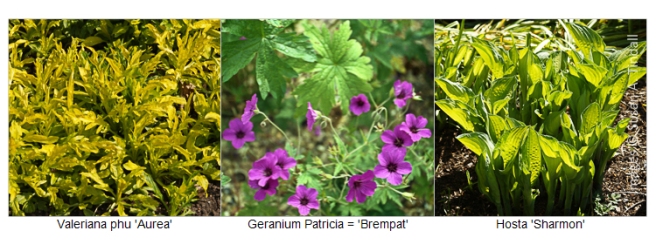
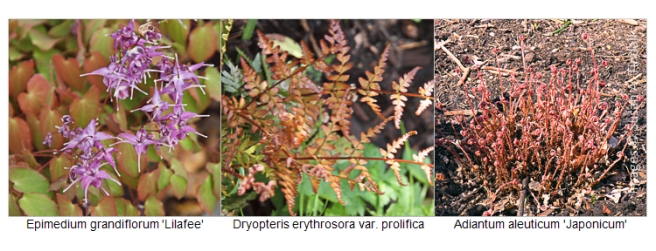
 A number of herbaceous plants surprise with their spring foliage and these include the eye-catching lobed lemon yellow leaves of Valeriana phu ‘Aurea’ and the vibrant yellow of hearty Geranium Patricia ‘Brempat’ that follows with an all-summer show of dark-eyed magenta flowers. Many hostas have yellow spring foliage and their large unfurling leaves have a beauty all their own. Hosta ‘Sharmon’ combines leaves that are largely creamy yellow in spring with grey summer tones, a beautiful foil for the lavender grey flowers. The spring foliage of the modest woodland Epimediums have a subtle beauty all their own, often having mottled foliage, while Epimedium grandiflorum ‘Lilafee’ is bronze or purple in spring with tiny purple dancing flowers.
 Finally, even the quiet ferns can have a surprising spring fling with the copper young foliage of architectural Dryopteris erythrosora var. prolifica . The aristocratic Adiantum aleuticum ‘Japonicum’ has exotic red-brown young fronds and then settles to a summer of green beauty.
 Add a new dimension to your garden with some ‘colour-changing’ plants!
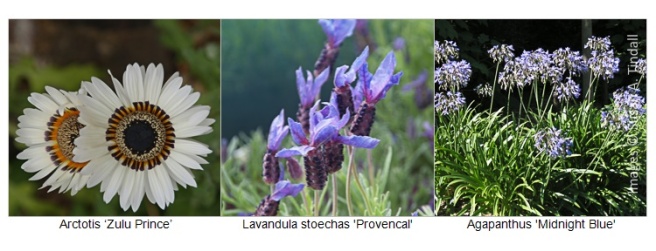
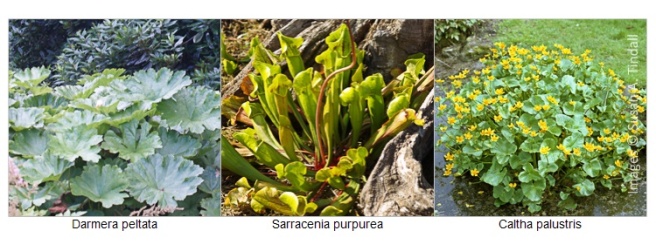
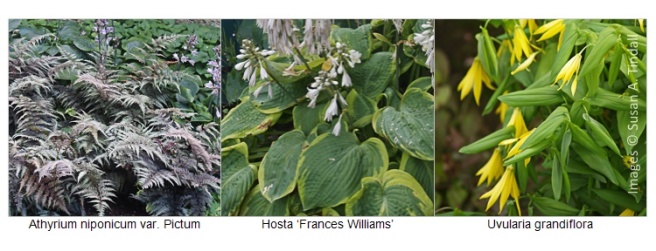 Moisture
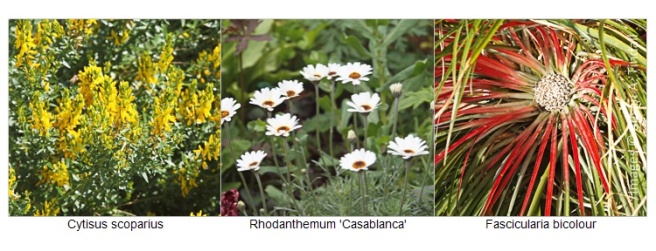
 A few plants need dry conditions to thrive. These include the charming Moroccan daisies such as Rhodanthemum ‘Casablanca’ (African Daisy Series) and the curious giant bromeliad Fascicularia bicolour, and members of the broom family such as Cytisus scoparius . The sun-loving plants mentioned earlier enjoy dry conditions.
 It is well worth looking at the light and moisture requirements of your plants and matching these to similar conditions in your garden. Plants that are happy perform better and do credit to your judgement and artistry.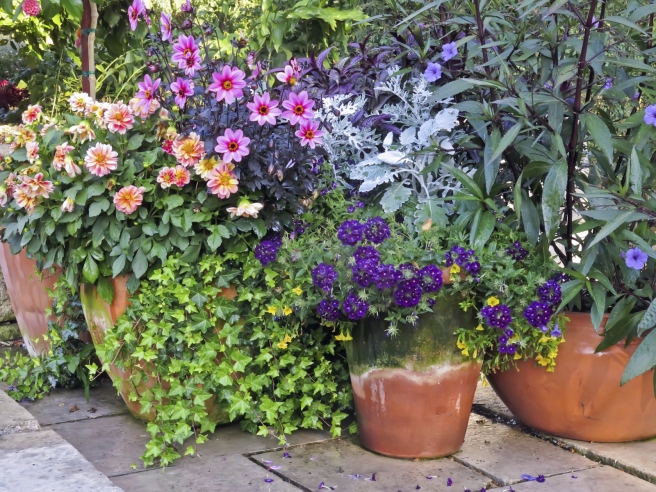
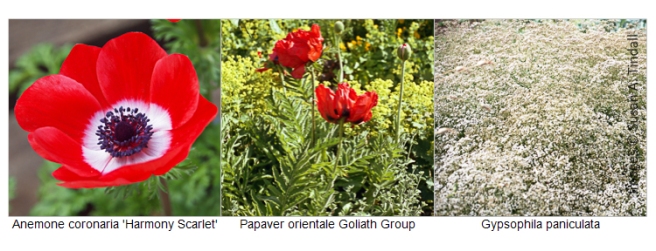 The oriental poppies are in flower during late May and June. Papaver orientale Goliath Group is perhaps the ultimate red statement. The huge scarlet flowers with papery petals, a bold black heart and black basal blotch can dominate any garden with their assertive floral beauty. They take up a fair amount of space and, after flowering collapse gracelessly. The classic trick used by clever gardeners is to plant Gypsophila paniculata behind it so that its foam of white flowers covers the declining poppy foliage.